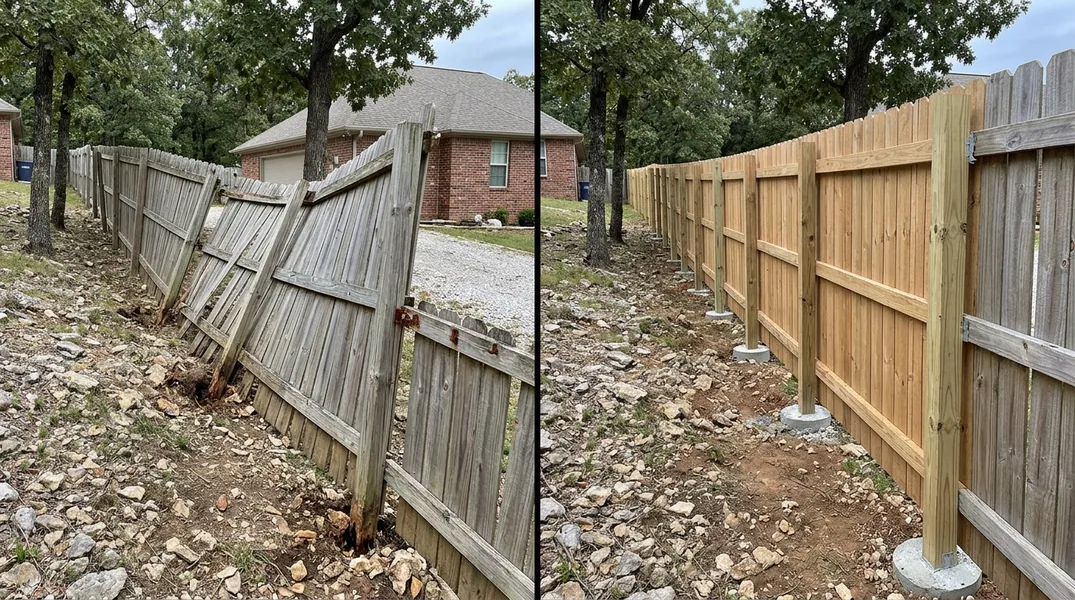
Why Fayetteville Fences Lean: The Local Geology Problem
If you've noticed your fence starting to tilt or lean in Fayetteville, you're not alone. Many homeowners in the area face this frustrating issue, and there's a good reason why. The underlying geology of northwest Arkansas plays a significant role in fence stability. Fayetteville sits on the Ozark Plateau, where shallow bedrock, limestone formations, and rocky soil are common. When fence contractors try to dig post holes, they often hit rock within just 12 to 18 inches of the surface.
This shallow rock creates a major problem for fence installation and longevity. Posts cannot be set deep enough into the ground to provide proper stability and frost protection. In regions with freeze-thaw cycles, shallow posts are particularly vulnerable. When the ground freezes and thaws repeatedly during winter, the soil expands and contracts, gradually pushing posts upward and outward. This heaving action is one of the primary reasons why leaning fences are so prevalent in our area. Combined with the natural slope of many residential lots in Fayetteville, these geological challenges create the perfect storm for fence problems.
How Sloped Terrain Accelerates Fence Leaning
Many properties in Fayetteville and surrounding areas have noticeable slopes. Whether your yard slopes downhill, sits on a hillside, or has uneven grading, slope creates additional stress on fence posts. Gravity naturally pulls on posts set on an incline, and water drainage patterns change how soil settles around the base of each post. On sloped terrain, posts on the downhill side experience more lateral pressure from soil movement and water runoff, which gradually forces them to lean.
The problem is compounded when the original Wood & Privacy Fence Installation didn't account for the slope properly. Posts should be set perpendicular to the slope, not vertically, to maintain true alignment and distribute stress evenly. Many older fences in the area were installed without this consideration, which is why you'll see so many leaning toward the downhill direction. If your fence is leaning, the slope of your property may be the culprit, and proper leaning fence repair requires understanding how terrain affects post placement and stability.
Rotted Posts: The Silent Destroyer of Fence Integrity
Even if your fence posts were installed correctly and deeply, wood rot remains one of the most common reasons fences fail and begin to lean in our humid climate. Wood is porous and naturally absorbs moisture. When posts are exposed to constant moisture from rain, ground contact, and high humidity, the wood begins to decay from the inside out. In Fayetteville's subtropical climate, wood rot progresses faster than in drier regions. The combination of warmth and moisture creates ideal conditions for fungal growth and wood deterioration.
Rotted posts lose their structural integrity gradually. What starts as soft wood at the base becomes increasingly weak, unable to support the weight and lateral pressure of fence panels. As the post weakens, it begins to lean, twist, or shift. By the time you notice visible leaning, the damage is often extensive. The worst part is that rot typically starts below ground level, where you can't see it. A post may look solid above ground while being completely compromised underground. This is why fence post replacement is often necessary, not just for cosmetic reasons, but for safety and functionality. If you suspect rotted posts, a professional inspection can identify the problem before your entire fence fails.
Fence Post Repair Near Me: When to Call a Professional
Recognizing when your fence needs professional attention is crucial. If you notice any leaning, tilting, or movement in your fence panels, don't wait. Minor issues become major repairs when left unaddressed. Signs that you need fence post repair include visible lean, wobbly panels, cracked or split posts, soft or spongy wood at ground level, and rust stains indicating internal decay. Some homeowners attempt DIY repairs, but without proper equipment and expertise, temporary fixes often fail quickly and may create safety hazards.
Professional fence contractors in Fayetteville have the experience to diagnose the root cause of leaning fences. Is it shallow rock preventing proper installation? Slope-related pressure? Rot? Frost heave? The solution depends on the cause. Sometimes fence post replacement is necessary, while other situations may allow for reinforcement or repositioning. A qualified contractor can also recommend preventative measures to extend the life of your repaired fence. If you're noticing fence problems on your property, contact Fayetteville Fence Contractors at (479) 480-5456 for a professional assessment.
Fence Post Replacement: What to Expect
When a fence post has rotted or been damaged beyond repair, fence post replacement is the most effective long-term solution. The process involves removing the damaged post, extracting any remaining material from the ground, and setting a new post with proper depth and concrete support. In Fayetteville, where shallow rock is common, contractors may need to use specialized drilling equipment or rock removal techniques to achieve adequate post depth. This is more involved than installation in areas with deep soil, but it's necessary for durability.
Modern fence post replacement also includes improved materials and techniques. Pressure-treated lumber resists rot better than older wood varieties. Some contractors recommend composite or vinyl alternatives that eliminate rot concerns entirely. Proper concrete installation around the post base is essential, creating a moisture barrier and anchoring the post securely. The depth and diameter of the concrete footer should be appropriate for your local soil conditions and climate. A properly replaced post should provide another 15 to 20 years of reliable service, compared to a poorly installed post that may fail within 5 to 10 years.
Prevention Tips to Keep Your Fence Stable and Straight
Prevention is always more cost-effective than repair or replacement. If you're planning a new fence installation or want to protect your existing fence, several strategies can help. First, ensure proper drainage around your fence line. Water should flow away from posts, not pool around them. Grading your yard to promote drainage and installing gutters or drainage systems near fence lines reduces moisture exposure. Second, if you have a sloped yard, work with experienced installers who understand how to set posts on inclines. Posts should be set deeper on the downhill side and perpendicular to the slope, not vertical.
Third, consider the material for your fence. While Wood & Privacy Fence Installation offers classic beauty, alternatives like Vinyl & PVC Fence Installation eliminate rot concerns entirely. Vinyl doesn't absorb moisture and requires no staining or sealing. For wood fences, regular maintenance including staining, sealing, and inspection can extend post life significantly. Finally, choose a reputable contractor with local experience. Contractors familiar with Fayetteville's unique geological and climate challenges will install your fence correctly from the start. If you're ready to discuss fence options or need a free estimate, reach out to Fayetteville Fence Contractors today.
Looking for a professional tree service in Fayetteville? Fayetteville Fence Contractors responds fast for all your fence needs.
Get a Free Quote